Financial Literacy Quiz
Open the online edition below to use this interactive tool.
By Vernon J. DeFlanders Sr. · Updated November 9, 2026
Use this financial literacy quiz to check eight everyday money concepts before making a decision. The questions cover budgets, move-in costs, emergency savings, debt, investment warnings, student loans and borrowing costs. Treat the result as a learning checkpoint rather than a judgment about your ability or financial situation.
For related planning resources, visit the Money pathway.
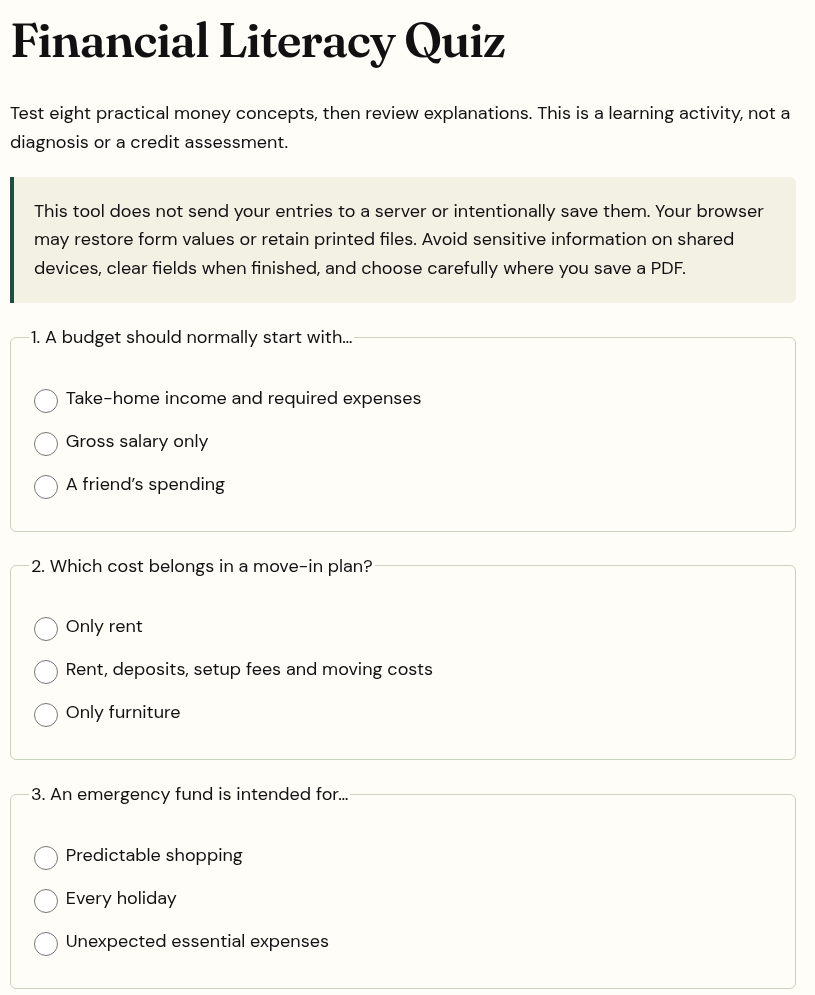
How to use the financial literacy quiz
Open the online tool and choose one answer for each question. Select Check answers when you are ready. The tool counts correct responses and provides a short explanation for every question, so review the explanation even when you chose the correct answer.
If a question is unfamiliar, pause and write down what you need to understand before acting. You can change your choices and check again. There is no timed exam, certificate, credit assessment or personalized financial diagnosis in this tool.
Turn an explanation into a practical check
Choose one topic that relates to your next bill or decision. For budgeting, gather actual take-home pay and required expenses. For a move, list deposits and setup charges separately from rent. For a borrowing question, check the lender’s current terms rather than treating a quiz explanation as a complete comparison.
For example, recognizing that move-in costs include more than rent gives you a useful next task: ask which charges are due before you receive the keys. Knowing the answer in a quiz does not establish whether a particular listing, loan or investment is suitable.
Keep the result in perspective
The score is the number of these eight answers you selected correctly. It does not measure your creditworthiness, predict future outcomes or replace a review of your own records. If you use Print / Save PDF, inspect the saved file and choose a suitable place to keep it.
For a practical follow-up, use consumer.gov’s budget guidance to list income and expenses.