What is affecting my energy most?
Look at sleep, meals, movement, stress, medications, pain, and schedule before blaming motivation.
Make practical wellness decisions around sleep, stress, food, movement, prevention, and knowing when general guidance should give way to qualified help.
Health is easier to manage when you stop treating everything as one giant problem. Sleep, food, movement, stress, preventive care, and support all affect how you function.
General education only. This page does not diagnose, treat, or replace qualified medical or mental-health care.

You do not need a perfect routine. You need a realistic next step and a clear line for when self-help is not enough.
Look at sleep, meals, movement, stress, medications, pain, and schedule before blaming motivation.
A consistent bedtime, one better meal, a short walk, or one appointment can beat an ambitious routine you cannot sustain.
Persistent, severe, worsening, or safety-related symptoms belong with a licensed professional, not an online checklist.
Health habits compound. Start with the basics, then use tracking and professional support where they actually help.
Protect a consistent sleep window and notice what repeatedly pushes it off course.
Keep practical staples around and build repeatable meals before chasing complicated plans.
Choose activity that fits your ability, schedule, and current professional guidance.
Notice recurring pressure, protect recovery time, and use clearer boundaries where needed.
Preventive visits, prescriptions, questions, and qualified mental-health support are part of adult health management.
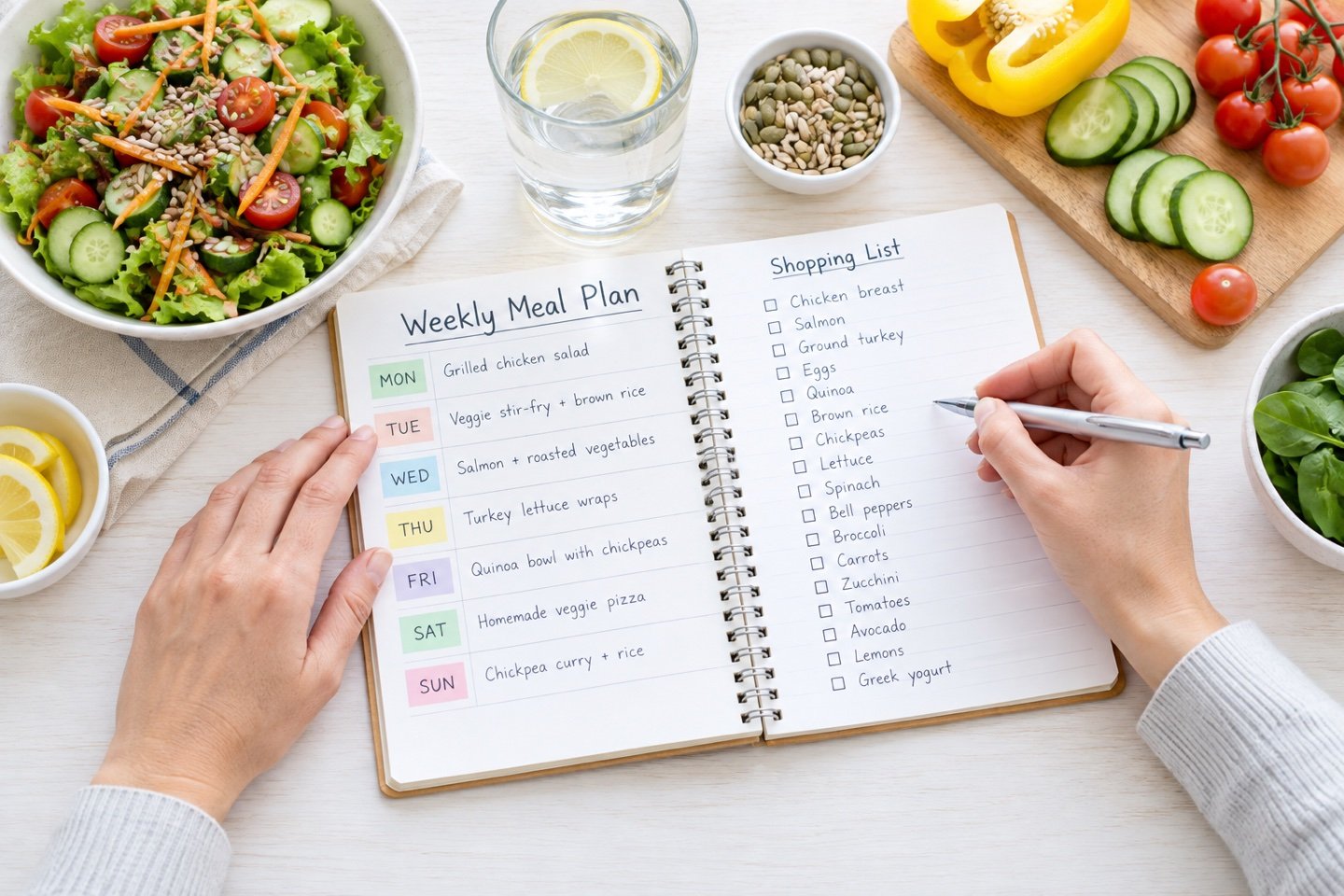
These educational resources are available in our library. They are not a diagnosis, treatment plan, or substitute for qualified care.
Practical strategies for calming the body, organizing responsibilities, and seeking support.
Open Stress Management TipsA guide to respect, communication, trust, boundaries, and conflict repair.
Open Building Healthy RelationshipsBuild confidence with simple kitchen preparation, basic methods, food safety, and manageable first meals.
Open Cooking for BeginnersA sustainable routine has to survive real workdays, budgets, travel, stress, and low-motivation weeks. If a plan only works under ideal conditions, it is not reliable yet.
Track patterns, not perfection. A few weeks of noticing sleep, energy, meals, movement, and stress can help you ask better questions. Tracking is information; it is not a diagnosis.
Know the line between education and care. If symptoms persist, worsen, affect safety or daily function, or involve medication questions, contact a qualified professional.
For one week, notice a few basics without turning the exercise into a diagnosis. If something is persistent, severe, worsening, or affecting safety or daily function, use qualified care rather than self-tracking alone.
Schedule consistency, wind-down routines, fatigue patterns, and recovery.
Affordable staples, simple meals, grocery planning, and realistic routines.
Pressure, boundaries, support, and knowing when to seek care.
Sustainable activity, schedule fit, ability level, and professional guidance.
Appointments, prescriptions, questions, records, and follow-up habits.
Use the Resource Library to find available guides for everyday routines, communication, and independent living.