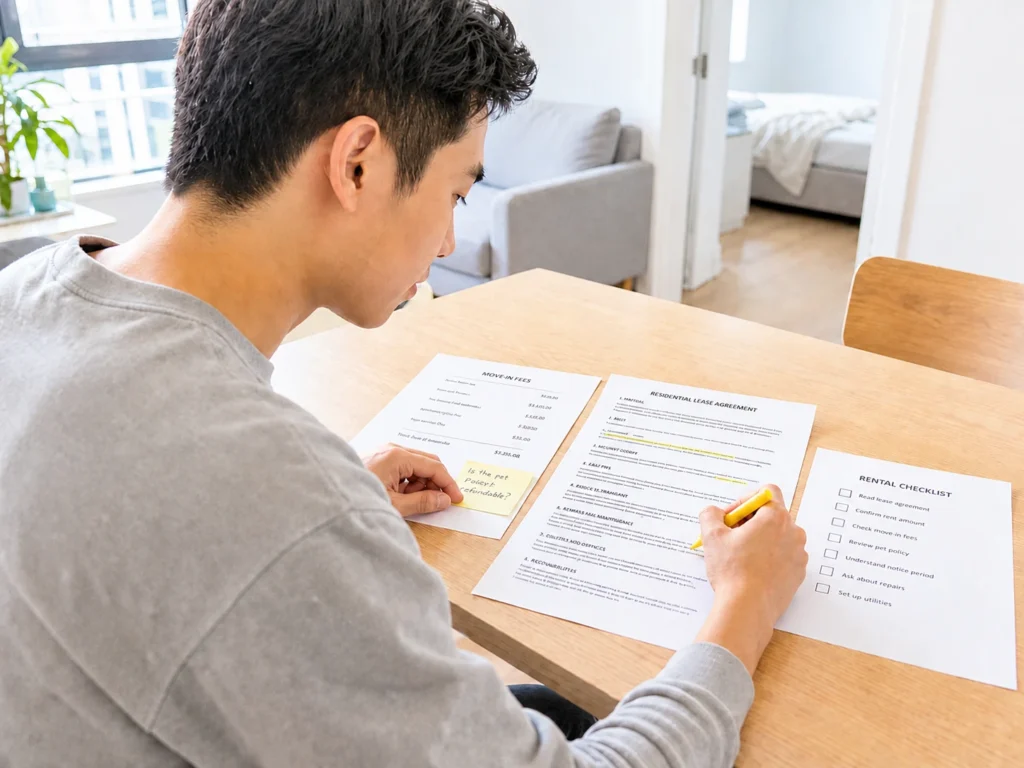
An apartment lease turns the promises you heard during the search into written responsibilities. Before signing, confirm the exact unit, people, dates, rent, deposits, recurring fees, utilities, property rules, repair process, renewal terms, and move-out duties. Mark anything that conflicts with the listing or conversation and ask for a written correction or explanation. Knowing how to read an apartment lease protects your money and your home.
How to read an apartment lease: start with the deal you accepted
Start with the basic facts. Confirm the legal names of the landlord or management company and every tenant, the complete property address, the apartment number, included parking or storage, the lease start and end dates, and the date possession begins. If the unit you toured is different from the unit listed, stop and resolve the difference.
Compare the lease with the advertisement, application, approval notice, fee list, and written messages. A verbal promise about new flooring, included parking, a repaired appliance, waived fee, or move-in date may be difficult to enforce if the lease says something else. Ask for the final agreement to include the promised term or a signed addendum before you rely on it.
Use the First Apartment Checklist to collect the documents and receipts that should match this review. Keep the final signed lease with them.
Identify every amount you may have to pay
Find the monthly rent, due date, accepted payment methods, grace period if any, and late-payment language. Then mark every other charge: security deposit, utility billing, parking, pets, trash, package service, technology, insurance, pest control, common-area charges, payment-processing fees, and any mandatory program or amenity fee. Learning how to read an apartment lease starts with the money.
Separate recurring charges from one-time amounts. Ask whether any charge can change during the lease, how the change would be calculated, and what notice the agreement describes. Review charges connected to returned payments, lockouts, replacement keys, repairs, rule violations, guests, early termination, transfers, renewal, and move-out.
The full total should still fit the plan from Rent Move-In Calculator. If the lease introduces a mandatory cost that was not in the budget, recalculate before signing rather than assuming you will absorb it later.
Read the deposit and move-in sections carefully
Confirm the amount due before move-in, which part is a security deposit, which payments are rent, and which charges are nonrefundable. Look for the conditions the lease says may lead to deductions, the process for documenting the unit’s condition, the address or method for notices, and the move-out steps tied to deposit return.
Local law may control deposit limits, storage, interest, inspection rights, itemized deductions, and return deadlines. A lease cannot be evaluated safely from generic internet advice alone. Check the official tenant information for the state, city, county, or housing program that applies to the property.
Complete a detailed move-in inspection even when the unit looks clean. Photograph existing damage, test fixtures and appliances, record missing items, and submit the condition report through the method and deadline the property requires. Keep proof that it was received.
Clarify utilities, maintenance, and repairs
List who is responsible for electricity, gas, water, sewer, trash, internet, landscaping, snow removal, pest treatment, filters, bulbs, and other routine tasks. If utilities are shared or billed by a third party, ask how your portion is calculated and where that method appears in the agreement. When you learn how to read an apartment lease, pay close attention to who fixes what.
Find the process for routine maintenance and emergencies. Record how to report a problem, what counts as an emergency, the after-hours contact route, and any tenant duty to prevent additional damage. Do not assume a text to the leasing agent satisfies a formal notice requirement if the lease specifies a portal, email address, or written form.
The CFPB notes that tenant rights are usually defined by the rental agreement together with state or local law. If a lease appears to shift responsibility for essential repairs, health, or safety in a way you do not understand, get qualified local help before signing.
Review rules about occupants, guests, pets, and roommates
Confirm who is authorized to live in the unit and how the lease treats long-term guests, subletting, replacement roommates, pets, assistance animals, smoking, noise, parking, common areas, and property access. Read every attached community rule or addendum; an attachment can create responsibilities just as the main lease does.
If you will share the home, identify whether each tenant is responsible only for an individual portion or whether the lease makes tenants jointly responsible for the full rent, damage, or other obligations. Do not guess. Ask what happens if one roommate leaves, fails to pay, or wants to be replaced.
Use the Roommate Agreement Template for bills, chores, guests, shared property, and communication. It helps roommates record everyday expectations, but it does not override the landlord’s lease or local law.
Understand access, privacy, and insurance language
Look for when and why the landlord may enter the unit, how notice is provided, and how emergencies are handled. State and local rules differ, so compare the lease language with official local tenant guidance if it seems broad or unclear.
Check whether renter’s insurance is required, the minimum coverage described, when proof is due, and whether the property sells or enrolls tenants in a separate product. Ask what the landlord’s insurance does and does not cover. Do not assume it protects your belongings, temporary housing, or personal liability.
Review language about cameras, smart locks, building apps, package services, and data collection when those systems are part of the property. Understand which technology is required, what it costs, and what happens if your phone, internet access, or account is unavailable.
Check renewal, termination, and move-out duties
Find out whether the lease ends automatically, converts to month-to-month, or renews unless notice is given. Mark the notice deadline, delivery method, and address. A calendar reminder well before that date can prevent an accidental renewal or extra month of rent. Part of how to read an apartment lease is checking how it ends.
Read the sections on early termination, transfer, replacement tenants, military orders if applicable, default, eviction procedures, and fees. Do not assume that moving out ends the duty to pay. Ask how the lease handles re-renting, notice, keys, cleaning, abandoned property, final utilities, forwarding addresses, and inspection.
Create a move-out folder on the day you move in. Save the lease, inspection, photographs, payment records, maintenance requests, notices, and later renewal documents there. Good records are easier to build over time than reconstruct during a dispute.
Look for required disclosures and separate legal questions
Some properties require federal, state, or local disclosures. The EPA explains that renters of most housing built before 1978 must receive specified information about known lead-based paint and hazards before signing, including available records, an approved information pamphlet, and a lead warning statement. Exceptions exist, so use the EPA’s current guidance for the property.
Other disclosures may concern utilities, flooding, pests, smoking, building conditions, shared meters, or local rights. Requirements vary widely. Ask for all documents referenced in the lease and do not sign a statement saying you received a disclosure that was not actually provided.
Housing-discrimination rights, disability accommodations, domestic-violence protections, subsidized-housing rules, and local rent or eviction laws can require specialized guidance. Preserve the documents and relevant dates, then contact the appropriate government agency, housing counselor, legal-aid organization, or qualified attorney when the issue goes beyond a plain-language contract review.
Ask questions and require written answers
Create a short issue list with the page, section, question, and requested correction. Prioritize anything involving money, unit identity, dates, utilities, repairs, occupants, renewal, termination, or a promise that affected your decision. Ask one clear question at a time.
If the property agrees to change a term, review the actual revised lease or signed addendum. A friendly email saying “don’t worry about that clause” is not the same as correcting the agreement. Make sure blanks are completed, changes are initialed or incorporated as required, and every tenant receives the same final version.
Never sign a document you cannot keep and review. Save the fully executed lease after all required parties sign it. Confirm the move-in amount, payment route, key handoff, inspection process, utility start dates, and emergency contact before moving day.
How to read an apartment lease in 30 minutes
- Confirm the parties, exact unit, dates, rent, deposits, and every recurring charge.
- Mark utilities, maintenance, repair, access, occupant, guest, pet, and insurance duties.
- Calendar renewal, notice, payment, inspection, and move-out deadlines.
- Compare the lease with the listing, application, promises, and official local tenant guidance.
- Get corrections and answers in the final written agreement before signing.
Continue with the First Apartment Checklist and the NextGen Adults Housing hub. The final cluster article will turn the signed agreement into a practical move-in budget.