Money · Interactive tool
Monthly Budget Calculator
Practice money skills with your own numbers: put income and expenses in one place, then see what remains.
Open calculatorBuild money skills around the problem in front of you: covering bills, planning spending, saving or borrowing. This is financial literacy for young adults in everyday terms. Choose one useful next step.
First find out how big the gap is. Put your take-home pay and bills in the numbers below. If you come up short, start with the biggest cost you can change.
Review your monthly balancePlan around the lowest month you can count on. When a bigger check comes, put the extra toward savings or a bill that is due soon.
Try Sam’s low monthList who you owe, the balance, the due date, the minimum payment and the interest rate. Then answer three quick questions.
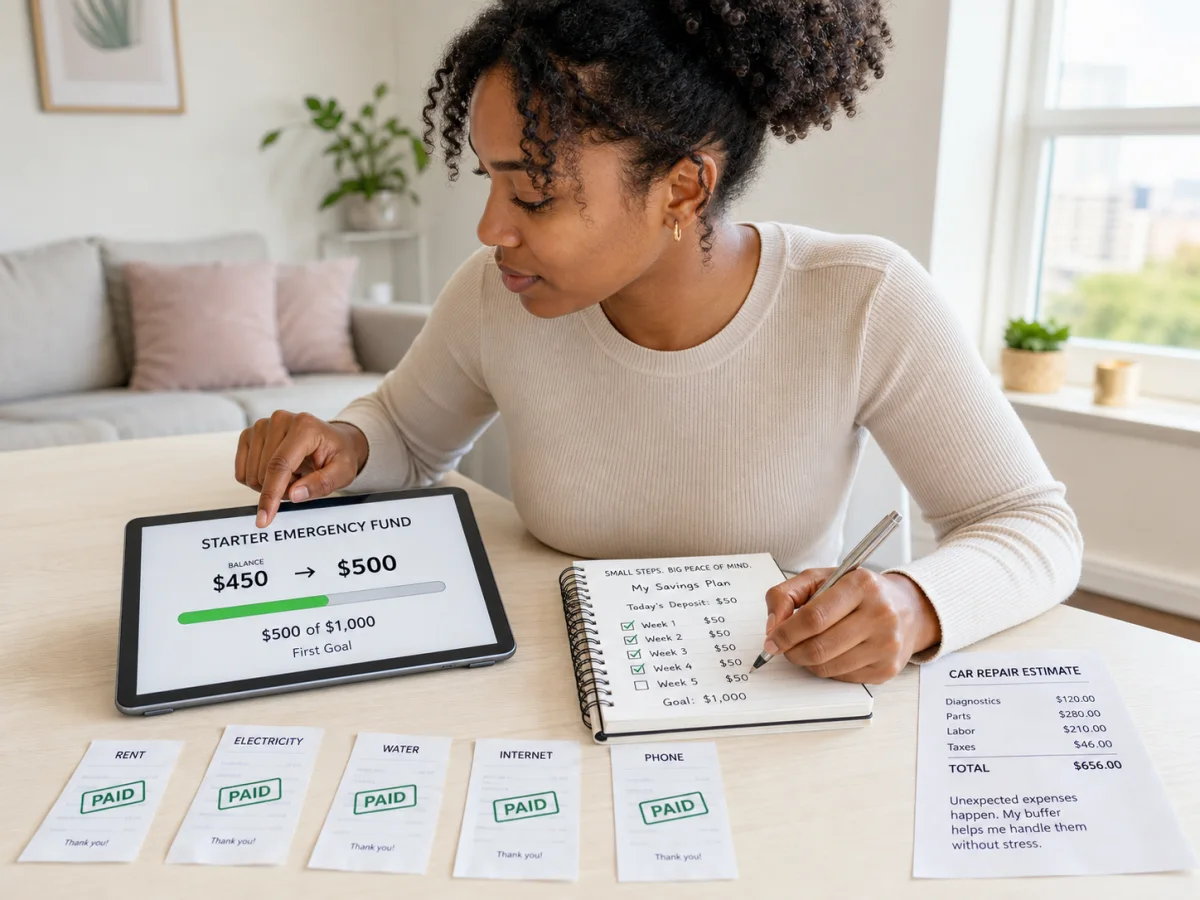
Pick a small first goal, such as one surprise bill. Even a small amount helps, and you can raise the goal later.
Read Emergency Fund 101Put in your own numbers, or load Sam’s months. Sam is a fictional example: the same $1,650 in costs, with pay of $1,800 in a low month and $2,200 in a high one.
Nothing here is stored or sent. This is a starting point, not financial advice.Pick where you are now. Come back when things change.
Practice money skills with your own numbers: put income and expenses in one place, then see what remains.
Open calculatorAnswer nine questions about what you actually do with money. You get one of five money patterns, its strengths and watch-outs, and three next steps. Educational, not a diagnosis.
Start the quizRead practical guidance for building financial independence in your twenties.
Read the guideGet familiar with the role of a financial buffer and how to think about starting one.
Read the guideBuild it on the lowest month you can count on. When a bigger check comes in, put the extra toward savings or a bill that is due soon instead of raising your everyday spending.
Try Sam’s low monthStart small. Even a small amount helps, so a first goal could be enough for one car repair or one surprise bill. From there, a common next goal is one month of essential costs, and more if your income is uneven.
Emergency Fund 101 CFPB emergency fund guideIf you are behind, call the company you owe first and ask about a payment plan you can manage. Otherwise, many people do a little of both: keep a small cushion so a surprise does not go on a card, pay at least the minimum on everything, then put extra toward the highest interest rate, which usually costs you the most.
FTC debt guidanceCompare your gross pay (before deductions) with your net pay (what reaches your account). Check the taxes, health insurance and retirement deductions, and ask HR or payroll about anything you do not recognize.
It is a number that predicts how likely you are to repay on time, based on your credit reports. Lenders use it, and landlords and insurers can too. You have more than one score. Paying on time and not using too much of your available credit are two habits you can control.
CFPB credit scores