
Nobody hands you a manual at 18. One day an adult fills out the forms and makes the calls, and the next day that adult is you. Most of what trips people up comes down to about twelve life skills for young adults. You do not need all twelve this month. Start with the one causing you trouble right now, do the small version, and come back for the next one when you are ready.
This list runs in a sensible order: money first, then work, then home, then everyday life. Each of these life skills for young adults comes with what it looks like in practice and one small thing to try.
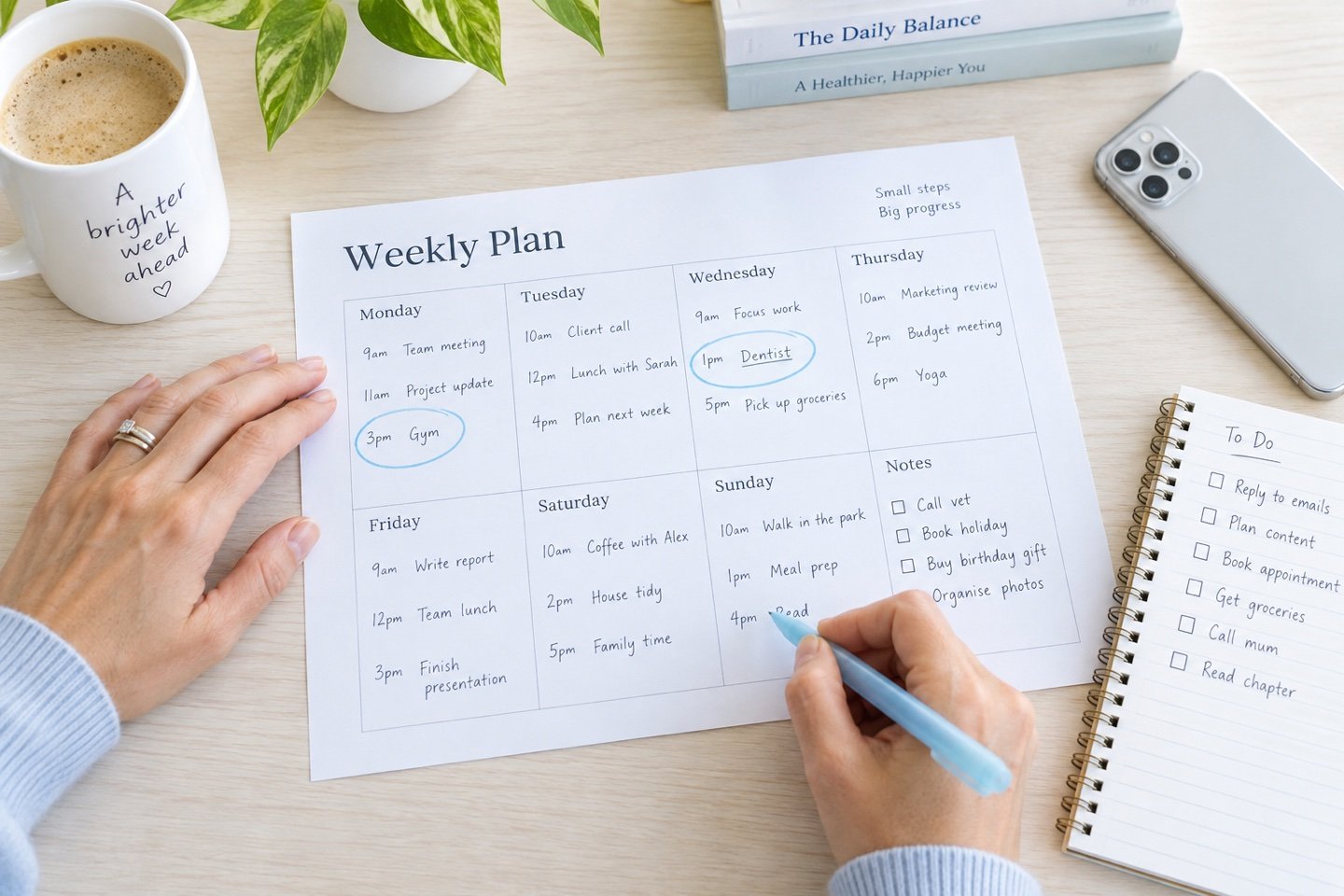
Start wherever the need is greatest. The order is a guide, not a rule.
Money life skills for young adults
1. Read your pay stub
Your pay stub tells you what you earned, what came out and why. Plenty of people never look past the final number, then wonder why a $20 hourly wage does not feel like $20 an hour. Learn the difference between gross pay and net pay, and find the lines for federal tax, Social Security and Medicare.
Try this: pull up your latest stub and run it through the Paycheck Decoder. If a deduction surprises you, ask payroll what it is. That question is normal, and payroll gets it all the time.
2. Make a simple budget
A budget is not a punishment. It is a plan for money you already have. Put your take-home pay at the top, list what must be paid, and see what is left before you decide what to spend. The first budget will be wrong. That is fine, because the second one will be closer.
Try this: open the budget calculator with last month’s bank statement beside you. Use real numbers, not hopeful ones. Say your take-home pay is $2,400 and rent, phone and insurance come to $1,500. You now know you have $900 for food, gas and everything else, and that is far more useful than guessing.
3. Know your credit
Lenders, landlords and some employers look at your credit history. A thin file is normal at your age. Errors are what you want to catch. You can get free reports from all three credit bureaus at AnnualCreditReport.com, and that is the site to use, since lookalikes exist.
Try this: pull one report and read every account on it. If you see something that is not yours, dispute it right away.
4. Start an emergency fund
A small cushion keeps a flat tire from becoming a crisis. You do not need months of expenses to begin. Start with whatever you can move each payday, even $10, and keep it in a separate account so it does not get spent by accident.
Try this: set up one automatic transfer for payday, then read how to build an emergency fund.
Work life skills for young adults
5. Write a one-page resume
School projects, volunteer work, part-time jobs and family responsibilities all count. For each one, write what you did and what changed because you did it. Stocked shelves is a task. Kept the stockroom organized so the Saturday shift stopped running out of supplies is a result.
Try this: write three lines about one thing you did well. You have the start of a resume.
6. Tell one good work story
Most interviews come down to examples. An employer asks about a time something went wrong, and they want to hear how you think. Prepare one story with three parts: what needed doing, what you did and how it turned out. Say it out loud until it takes less than a minute.
Try this: practice with a friend, then see Career for the next step.
7. Be easy to count on
This one takes no talent, and it is rarer than you would think. Show up on time. Ask questions early. Tell people about a problem before they find it. Do what you said you would do, and if you cannot, say so before the deadline rather than after it. People remember who made their job easier.
Try this: for one week, write down every promise you make at work and check them off.
Home life skills for young adults
8. Figure the real cost of moving
Rent is only part of it. Add the deposit, application fees, utility setup, movers or a truck, and the things you forget until the first night, like a shower curtain and a can opener. People who skip this step often start their new place already behind.
Try this: use the First Apartment Checklist before you apply anywhere, so the full cost is on paper first.
9. Read a lease before you sign
A lease is a contract, and your signature counts. Look for how long it runs, what fees apply, who fixes what, how much notice you must give and how you get your deposit back. Ask about anything you do not understand, and get any promise from the landlord in writing.
Try this: read one full lease with a highlighter, then see Housing for help.
10. Cook five cheap meals
Five dependable meals will save you more than almost any budgeting trick. Pick things you actually like, keep them simple and repeat them. Rice and beans, eggs and toast, pasta with a jar of sauce and whatever vegetables are on sale, a pot of chili, a sheet pan of chicken. Nobody is grading you.
Try this: cook one of them this week and write down what the groceries cost. Compare that to what you paid for takeout last week.
Everyday life skills for young adults
11. Handle your own appointments
Making your own doctor or dentist appointment feels bigger than it is. Make the call yourself, have your insurance card ready and write your questions down first, because they tend to vanish once you are in the room. Learn the name of your plan and which doctors are in its network.
Try this: book one checkup you have been putting off. Health covers where to go and what to bring.
12. Plan your week
Fifteen minutes on Sunday beats a week of catching up. Write down what is due, pick three priorities and put them on specific days. Leave some room, because something will go sideways. A plan that survives a bad Tuesday is worth more than a perfect one that falls apart by lunch.
Try this: pick your three priorities for next week and put them in your phone calendar tonight.
How to learn these without feeling overwhelmed
Twelve life skills for young adults can sound like a lot, so do not treat this like a test. You will learn most of them by getting them a little wrong first. Pick one skill, give it a week and move on when it feels normal. Ask for help when you get stuck. A parent, an older coworker, a teacher or a neighbor will usually be glad you asked, and asking is a skill too.
Where to start
If you are not sure which one comes first, start with your pay stub. Every other money decision depends on knowing what you really take home. Once you know that number, a budget gets easier, moving costs make more sense and saving stops feeling like guesswork.
It also helps to keep score of what you have already handled. Keep a short list on your phone of the skills you have tried, even if they went badly the first time. After a few months you will look back and see how much you can do on your own. Confidence rarely shows up first. It usually arrives after you have done the thing once or twice.
Life skills for young adults get learned one at a time, so pick one today and do the small version. That is how all of this gets learned.