SMART Goal-Setting Worksheet
Use the online edition, print the PDF, or download the working materials below.
By Vernon J. DeFlanders Sr. · Updated November 9, 2026
Plan SMART goals
SMART goals turn a general intention into an action you can review. Use this worksheet to define an outcome, realistic constraints, a target date, and evidence of progress. Choose a goal you can influence and revise the plan when circumstances change.
For related guidance and practical resources, explore the Productivity pathway.
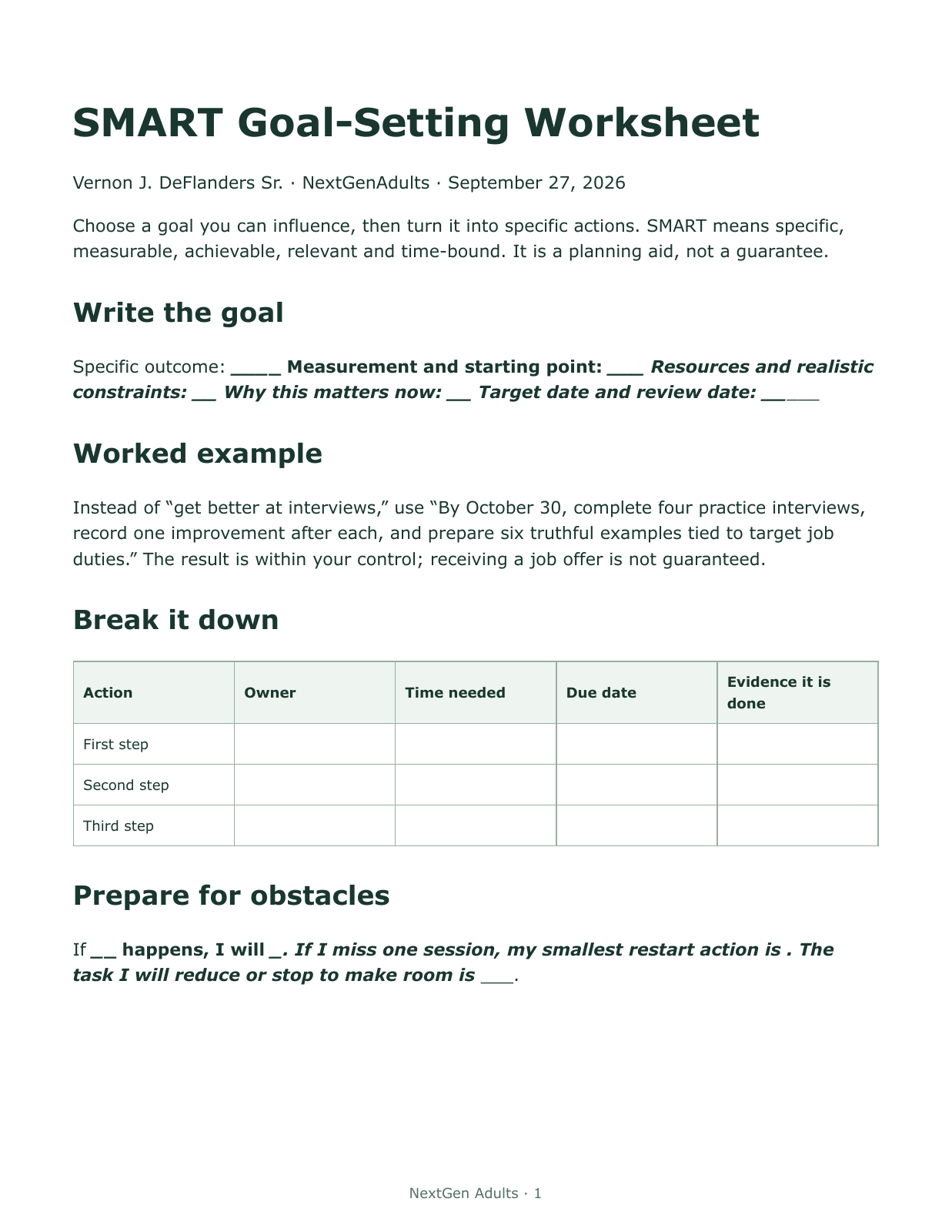
Choose a goal you can influence, then turn it into specific actions. SMART means specific, measurable, achievable, relevant and time-bound. It is a planning aid, not a guarantee.
Write the goal
Specific outcome: ____ Measurement and starting point: ___ Resources and realistic constraints: __ Why this matters now: __ Target date and review date: _____
SMART goals worked example
Instead of “get better at interviews,” use “By October 30, complete four practice interviews, record one improvement after each, and prepare six truthful examples tied to target job duties.” The result is within your control; receiving a job offer is not guaranteed.
Break it down
| Action | Owner | Time needed | Due date | Evidence it is done |
|---|---|---|---|---|
| First step | ||||
| Second step | ||||
| Third step |
Prepare for obstacles
If __ happens, I will _. If I miss one session, my smallest restart action is . The task I will reduce or stop to make room is ___.
SMART goals: review and adjust your plan
What happened? What helped? Was the goal still relevant? Adjust the action, scope or date using evidence. Keep a record of progress rather than rewriting the goal every time motivation changes.
Use a primary reference
Cornell’s time planning guidance shows how broader calendars and weekly plans can work together. Use that planning context to give your goal realistic time alongside existing commitments.