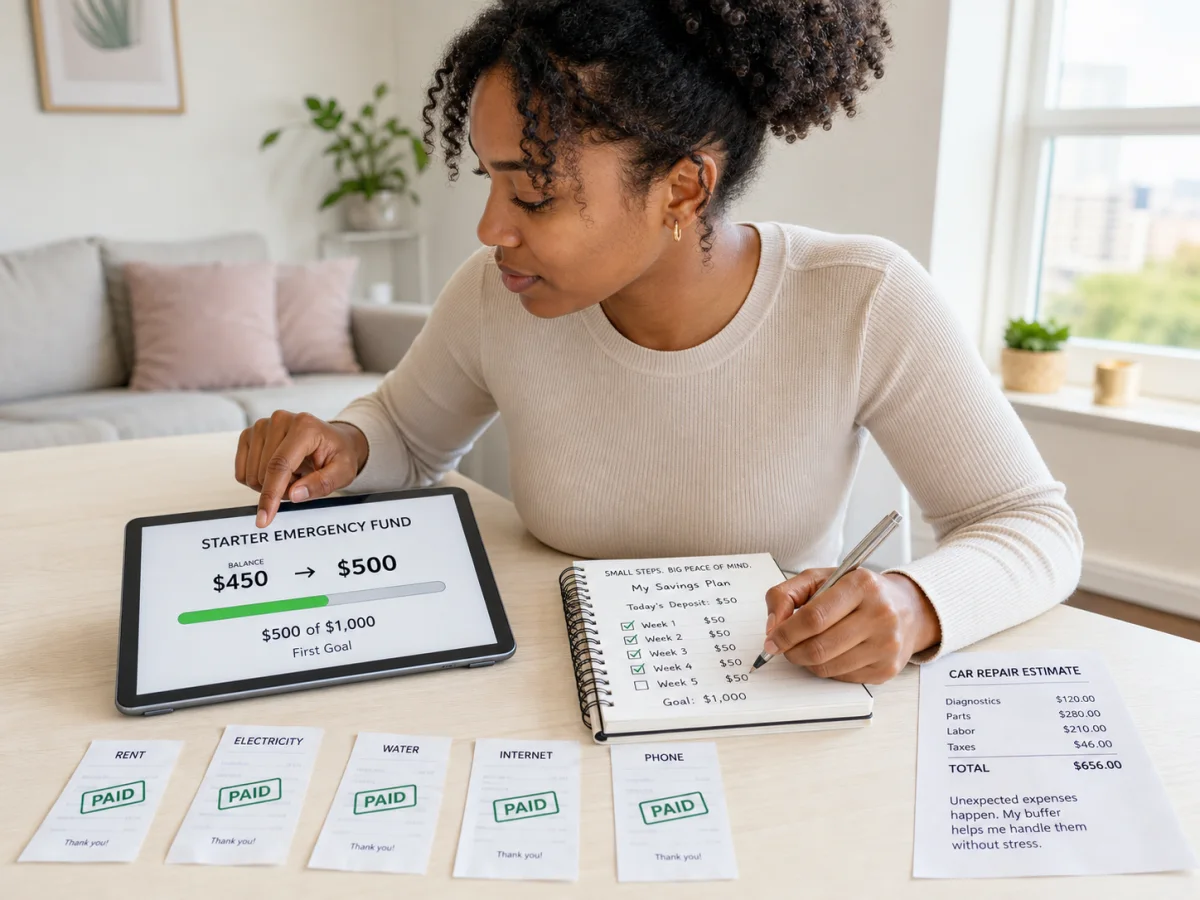
An emergency fund is money set aside for necessary costs you did not plan for, such as a repair, a medical bill, or a temporary loss of income. How much you need depends on your essential expenses and the risks in your own life. Start with a reachable first target, build toward one month of essentials, and then decide whether a larger reserve makes sense for your household. For the broader money picture, use the financial independence guide to connect emergency savings with cash flow, debt, and longer-term goals.

What an emergency fund is for
The Consumer Financial Protection Bureau describes an emergency fund as a cash reserve for unplanned expenses or financial emergencies. The key words are necessary and unplanned. A car repair that keeps you able to work may qualify. A predictable insurance payment, annual registration fee, or planned trip belongs in the regular budget instead.
Write down two or three situations that would count as emergencies for you. Then list predictable costs that sometimes feel surprising only because they arrive irregularly. A separate sinking fund for those known costs keeps the emergency reserve available for actual financial shocks.
How much emergency savings do you need?
There is no single number that fits everyone. CFPB guidance says the amount depends on your situation and suggests considering the unexpected expenses you have faced before. A useful plan is to build in stages instead of waiting until one large goal feels affordable.
- First-line buffer: Choose an amount that could cover one common disruption in your life.
- One-month milestone: Calculate one month of essential expenses and work toward that total.
- Longer reserve: Add more months gradually if your income, obligations, or household risks call for a wider margin.
These are planning milestones, not a promise that a particular amount will cover every emergency. Revisit the target when your rent, work, health needs, transportation, or family responsibilities change.
Calculate one month of essential expenses
Use actual bank and credit-card activity rather than guesses. Review several recent months so you do not miss bills that arrive less often. The CFPB recommends checking statements carefully and including irregular costs when you assess spending.
Count the expenses you would still need to pay during a serious income interruption:
- Housing, basic utilities, and essential phone or internet service
- Basic groceries and household supplies
- Transportation required for work, school, medical care, or caregiving
- Insurance, medicine, and ongoing health needs
- Minimum debt payments and other required obligations
- Essential support for children or other family members
Leave out spending you could pause in a genuine emergency. Add the essential categories to get a monthly baseline. The budget calculator can help you organize income and expenses before choosing a target.
| Expense type | Usually include? | Reason |
|---|---|---|
| Rent and utilities | Yes | Core housing costs continue during an emergency. |
| Minimum debt payments | Yes | Required obligations generally continue. |
| Entertainment | Usually no | It can often be reduced temporarily. |
Start small and build consistently
If the full target feels far away, shrink the first step. Choose a recurring amount that fits the cash you actually have after required bills. The FDIC notes that automatic transfers on a regular schedule can help build emergency savings. A smaller transfer that continues is more useful than an ambitious transfer that repeatedly causes an overdraft or has to be reversed.
Set the transfer for shortly after income arrives, then review it after a month. Increase it when a debt payment ends, income rises, or a recurring expense falls. If income varies, choose a modest baseline and add more during stronger weeks. For more context on fitting savings into the rest of your plan, read the financial independence guide.
Adjust the target for your real risks
Two people with the same monthly expenses may need different reserves. Consider what could make a disruption longer or more expensive:
- Income that changes by season, schedule, commission, or contract
- One household income supporting more than one person
- Health costs that are difficult to predict
- A vehicle or specialized equipment that is essential for earning income
- Limited access to backup housing, transportation, or family support
Do not use this list to scare yourself into an impossible goal. Use it to decide which risks deserve attention first. You can strengthen the reserve while also improving insurance coverage, maintenance habits, or other protections that reduce the chance of a large surprise.
Keep the money safe and accessible
Emergency money should be available when needed without depending on a market sale. It should also be separate enough from everyday spending that it is not used casually. A dedicated savings account at an insured bank or credit union may fit those needs. Check the institution, account terms, transfer time, withdrawal rules, minimums, and fees before choosing.
The FDIC explains that eligible deposit accounts at an FDIC-insured bank receive deposit insurance within applicable limits, while stocks, bonds, and mutual funds are not FDIC-insured deposits. Credit unions may use a different federal insurer. Confirm coverage with the institution rather than assuming every product offered by a bank or financial app is insured.
Decide when to use it and how to refill it
Before taking money out, ask three questions: Is the expense necessary? Was it unplanned? Would delaying it create a larger problem? Your own written rules make the decision easier when stress is high.
Using the fund for a real emergency is not failure. It is the reason the money was saved. Afterward, review what happened, restart the automatic transfer, and rebuild at a pace that protects current bills. If the cost was predictable, create a separate category for it next time.
Your 20-minute next action
- Open recent statements and total one month of essential expenses.
- Choose a first-line target you can explain in one sentence.
- Schedule a sustainable recurring transfer.
- Write down what qualifies as an emergency.
Continue with the guided Money page, use the Budget Calculator to check your essential-expense baseline, or browse the current Money resources for another practical next step.
Frequently asked questions
Is $1,000 enough?
It can be a useful first milestone for some people, but the right amount depends on your essential expenses and the size of likely disruptions. Treat it as a starting point, not a universal finish line.
Should I keep cash at home?
A small amount of physical cash may help during a short outage, but most emergency savings should generally remain in a secure, accessible account that you can track and protect.
When should I increase the target?
Review the target after major changes such as moving, changing jobs, adding dependents, taking on new debt, or becoming responsible for a vehicle or other essential expense.