Money without the mystery

Make money decisions with a plan you can actually follow.

Understand what is coming in, choose where it needs to go, and build breathing room one practical decision at a time.

Young adult making a deposit at an ATM
Make the next decision with context

What to understand before the next stage

Use these checkpoints to slow down the expensive decisions and move faster on the useful ones.

Before you cut anything

Separate fixed needs from flexible choices.

Start with take-home income and the bills that keep housing, food, transportation, insurance, and minimum payments intact. Flexible spending matters, but the plan becomes usable only after necessities and due dates are visible.

Build the monthly picture
When debt feels urgent

Protect every account, then focus extra money.

Keep required minimums current while directing any extra amount toward one expensive balance. A focused order is easier to sustain and reduces the risk of solving one debt problem by creating a missed-payment problem elsewhere.

Find the debt worksheet
When the month is tight

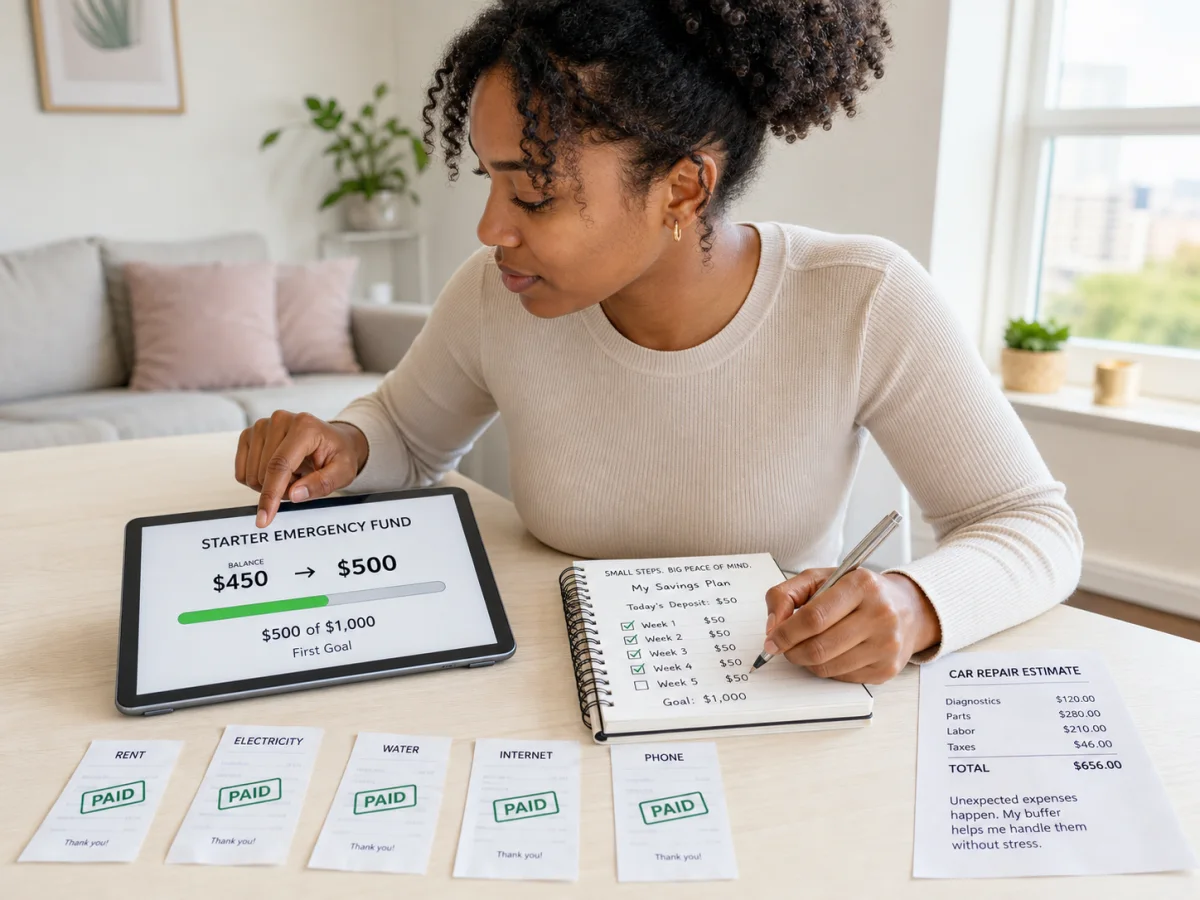
A small buffer still changes the next emergency.

The first savings target does not have to cover every disaster. Choose one common surprise—such as a repair, copay, or utility spike—and build toward that amount before expanding the goal.

Read emergency fund guidance
A practical financial foundation

Financial literacy begins with the decisions already on your calendar.

You do not have to master every money topic before making progress. Start with the next paycheck, the next group of bills, and the next expense that could knock the month off course.

01

Know what is usable

Take-home pay is the starting number. Gross pay explains your salary, but the amount deposited into your account is what can actually cover bills, spending, debt, and savings.

02

Protect what keeps life running

Housing, food, transportation, insurance, utilities, and required minimum payments come before optional spending or an aggressive payoff goal.

03

Create one margin

A small amount left unassigned gives the plan room for a price change, a late shift, a copay, or another ordinary surprise.

Choose a practical starting point

Start with the money pressure you are feeling now

Choose the row that sounds closest to your situation. One completed step is more useful than a perfect plan you cannot maintain.

Your situationStart hereUseful next step
My pay disappears before the next paydayList take-home income, due dates, and essential bills.Use the Budget Calculator to see the complete month.
I am behind or worried about missing paymentsProtect housing and basic needs, then contact the company before the due date when possible.Record every minimum, rate, balance, and payment arrangement.
Debt is current but expensiveKeep all minimums current and choose one balance for extra payments.Use the Debt Management Worksheet to compare the payoff order.
One surprise keeps becoming new debtChoose a first buffer based on a common expense you have actually faced.Read the emergency-fund guide and automate a manageable amount.
First-paycheck example

Plan the deposit—not the headline salary.

Suppose a paycheck deposits $1,420 after taxes and payroll deductions. The first pass is not a strict formula. It is a complete picture that protects essentials and shows the real tradeoffs.

Essential bills due before the next paycheck
$920
Groceries, transportation, and flexible needs
$310
Extra debt payment or short-term savings
$120
Unassigned breathing room
$70

The useful question is not whether these percentages look impressive. It is whether every dollar has a realistic job and the plan can survive the next two weeks.

Choose one money step

Choose the money step that reduces pressure now.

Start with the step in front of you: know your numbers, protect essentials, reduce costly debt, or build a buffer. Select a stage below for focused guidance and a practical next action.

01 Your focus right now

Know your numbers

List income, essential bills, flexible spending, balances, rates, and due dates.

Build your monthly budget
Young adult reviewing a monthly budget at a kitchen table
Use what helps now

Practical money resources

Choose one focused guide, worksheet, or tracker for the challenge in front of you.

Financial LiteracyPDF

Personal Budgeting Checklist

A step-by-step checklist for creating, reviewing, and maintaining a personal budget.

Open Personal Budgeting Checklist
Financial LiteracySpreadsheet

Debt Management Worksheet

A worksheet for recording balances, rates, minimum payments, and a chosen repayment strategy.

Open Debt Management Worksheet
Financial LiteracyPDF

Student Loan Repayment Tracker

A worksheet for tracking student loan balances, interest rates, and payment plans.

Open Student Loan Repayment Tracker
Go a little deeper

Related money guidance

Use these articles when you want context, examples, and a fuller explanation.